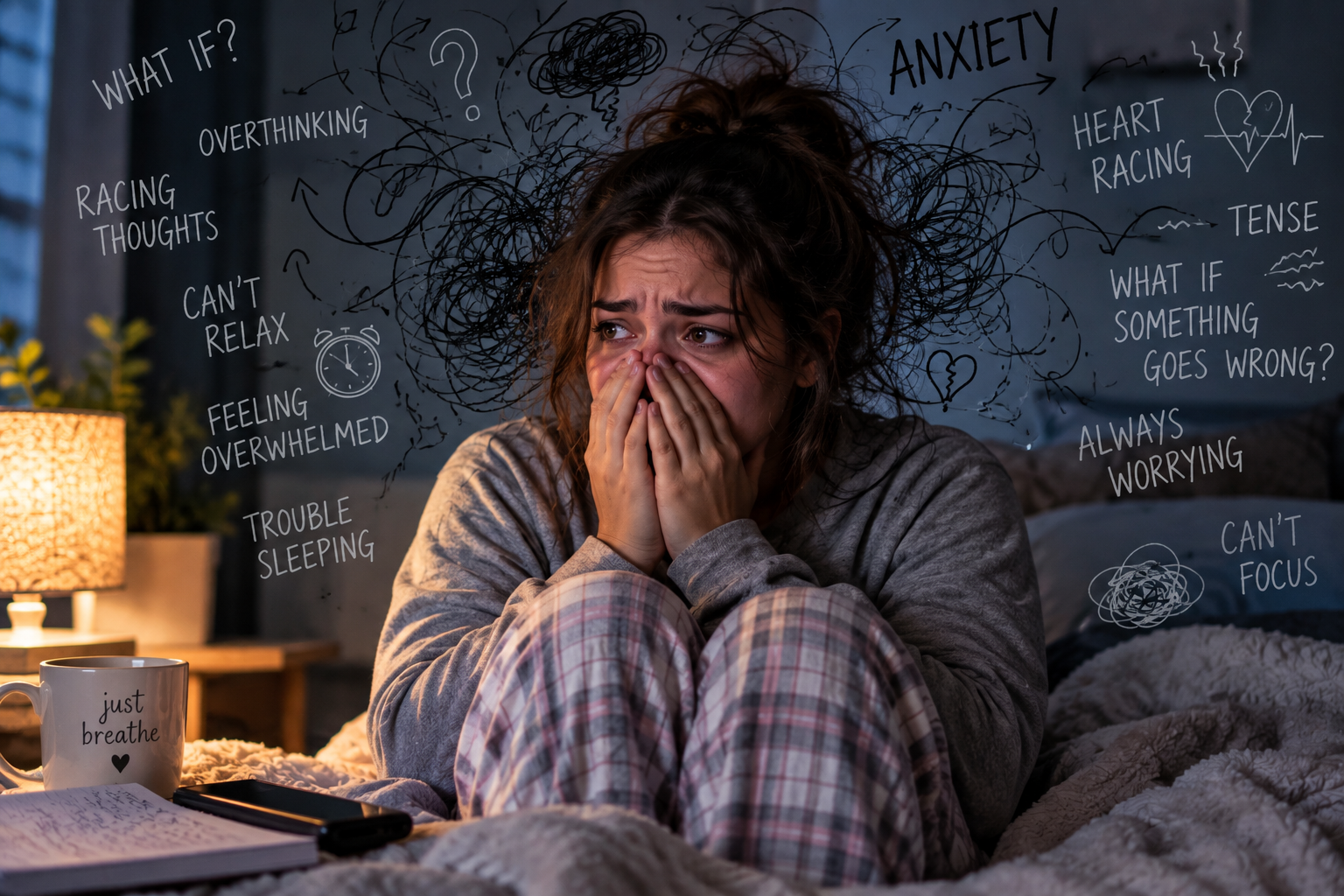
Anxiety Disorder
Anxiety disorders are mental health conditions that involve excessive or persistent fear, worry, nervousness, or a sense that something bad is going to happen. While everyone experiences anxiety sometimes, an anxiety disorder can become intense enough to interfere with work, relationships, sleep, concentration, and everyday activities.
Anxiety can affect both the mind and body. Someone may experience racing thoughts, constant overthinking, difficulty relaxing, irritability, trouble concentrating, a rapid heartbeat, sweating, trembling, nausea, muscle tension, or shortness of breath. There are several types of anxiety disorders, including Generalized Anxiety Disorder (GAD), Panic Disorder, Social Anxiety Disorder, and specific phobias.
Helpful coping mechanisms include:
Practice slow breathing. Take slow, controlled breaths when anxiety begins to rise.
Use grounding techniques. Focus on what you can see, hear, touch, smell, and taste to bring yourself back to the present.
Challenge anxious thoughts. Ask yourself, “What evidence do I have that my fear will actually happen?”
Limit caffeine and stimulants. They can sometimes worsen physical anxiety symptoms.
Exercise regularly. Walking, swimming, stretching, or other physical activity can help relieve stress and tension.
Write your worries down. Journaling can help organize racing thoughts and identify triggers.
Maintain healthy sleep habits. Anxiety and lack of sleep can feed into one another.
Talk to someone. Trusted friends, family, support groups, or mental health professionals can provide support.
Consider therapy. Treatments such as Cognitive Behavioral Therapy (CBT) can be very effective for many anxiety disorders.
Having anxiety doesn't mean someone is weak or simply needs to “stop worrying.” Anxiety disorders are real, treatable conditions, and learning the right coping skills can make them much more manageable.
I understand that Mindful Haven provides peer support and a listening ear, not professional therapy, diagnosis, medical advice, or crisis intervention. I understand that the owner of Mindful Haven is sharing support based on personal experience and is not acting as my therapist or healthcare provider.